
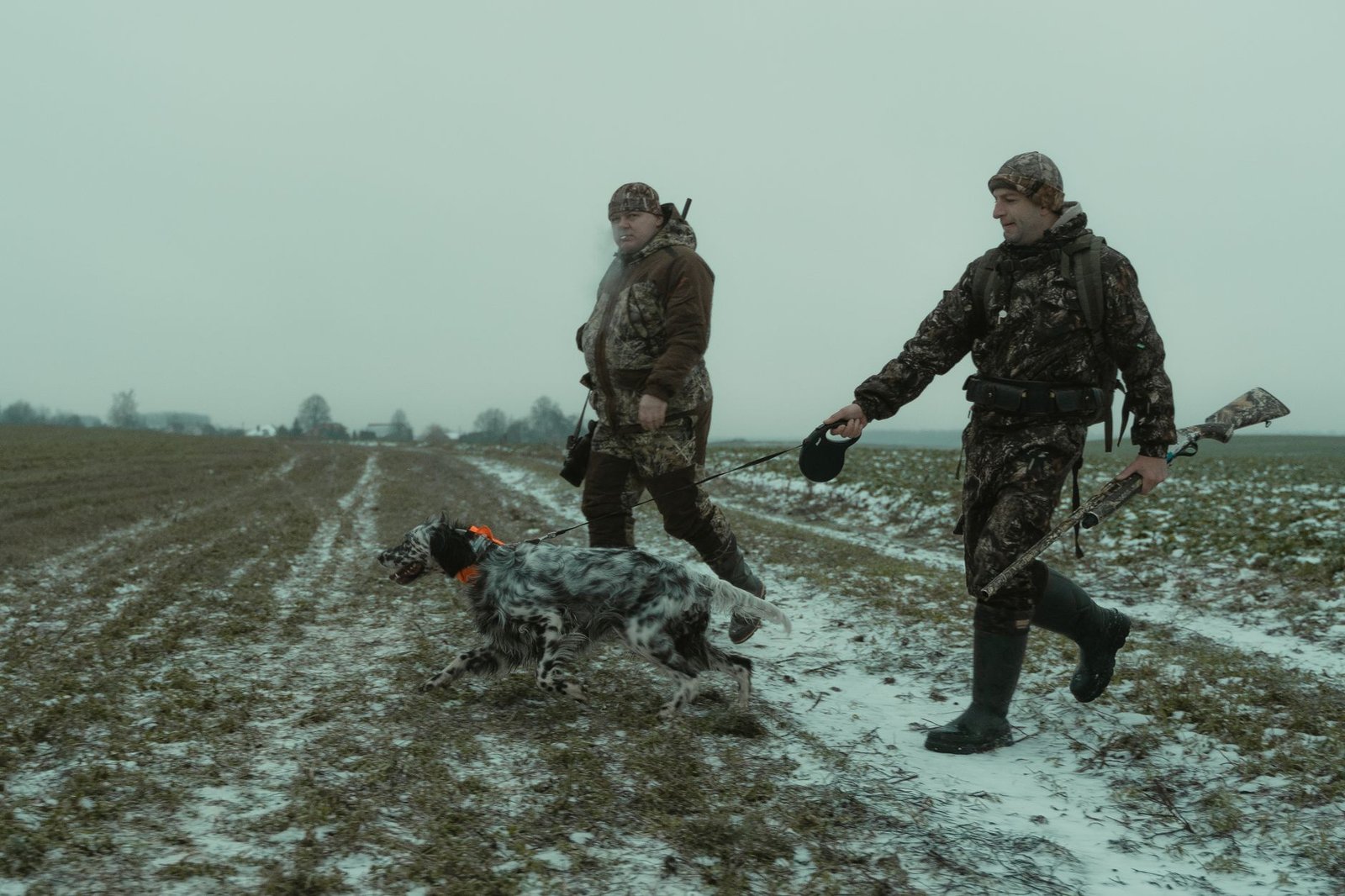
Fall hunting seasons open in parts of the backcountry around Mission, and a dog moving through brush can be mistaken for game. Put bright orange on your dog and yourself, keep your dog close and on the trail, and avoid dawn and dusk in hunting areas. Carcasses, traps and gunfire bring risks of their own.
Why fall walks need a little more thought
Mission sits on the edge of a huge area of forest, lakes and forest service roads, and plenty of local dogs spend their weekends out there. Through the fall, hunters use parts of the same backcountry for deer, grouse and waterfowl. Seasons and permitted areas vary, and most hunters are careful, but a brown dog pushing through undergrowth at first light can look a lot like a deer.
None of this means staying home. It means walking in a way that makes your dog obvious and keeps it within reach.
Be seen
- Put blaze orange on your dog: a vest, a wide collar or a bandana, ideally on both sides of the body so it shows from any angle.
- Wear it yourself, with a hat or vest that stands out against fall colours.
- Add a bell or a light to your dog’s collar in thick cover or low light, so hunters can hear or see movement for what it is.
- Talk as you walk. Voices tell anyone nearby that people are on the trail.
Stay close and choose your times
- Keep your dog on the trail, and on a leash or long line if it tends to range into the bush.
- Avoid dawn and dusk in areas where hunting happens. Those are the busiest hunting hours and the hardest light for telling animals apart.
- Check local regulations and signs before heading out, and pick trails where hunting is not permitted during the busiest weeks.
- Be extra cautious near marshes and sloughs in waterfowl season, where hunters may be hidden in blinds.
Gunfire and frightened dogs
Distant shots can send a noise-sensitive dog running blindly, and a dog lost in the backcountry in the fall faces cold nights, water and wildlife. Keep nervous dogs leashed, check that the microchip details list a phone number you answer, and keep a tag with your number on the collar. If your dog panics, stop, crouch down and call calmly rather than chasing.
Carcasses and gut piles
Hunters often leave the internal organs of game animals in the bush, and dogs find them irresistible. Eating them can cause vomiting and diarrhea, bones can splinter or block the gut, and spoiled meat carries bacteria. Carcasses from animals shot with lead ammunition can also contain small lead fragments, which are toxic if swallowed. If your dog eats from a carcass, phone us, especially if it later vomits, seems weak, wobbly or unusually quiet.
Traps and snares
Licensed trapping also takes place on some Crown land through the late fall and winter, so keep your dog on the path and close to you. If your dog is caught, act quickly but calmly, and phone for help while you work, because some traps can suffocate a dog within minutes. Cover the dog’s head with a jacket or towel first, since a panicking dog may bite.
- Foothold traps open when you press down firmly on the springs.
- Snares can be loosened at the lock or cut with cable cutters, which are worth carrying on backcountry walks in trapping season.
- Body-gripping traps are the most dangerous. The springs have to be compressed and held with their safety catches before the jaws release, so it is worth learning how before the season if you walk in these areas.
Any dog that has been caught needs a veterinary check afterward, since injuries can be worse than they look.
If your dog is hurt
Gunshot wounds, trap injuries, deep cuts from brush and injuries from a fall can all be more serious than they appear. Keep your dog as still as possible, cover bleeding wounds with a clean cloth and firm pressure, and phone our urgent care team on the way in. X-rays through our diagnostics service can find pellets, fractures and swallowed bone, and our surgical services team handles wounds that need repair. We are closed on statutory holidays and after hours, so at those times make your way to an open emergency hospital and phone ahead.
For households that hunt with dogs
Working dogs cover a lot of ground in cold water and rough cover. A check before the season catches sore joints, dental problems and overdue vaccinations. Pack a small first aid kit, extra water and food for the dog, and a towel to dry and warm them between retrieves. Watch for torn pads, cuts, eye injuries from branches and grass seeds in the ears and between the toes.
Trail safety is a year-round topic here. Our guide to safe spring hikes with your dog in Mission covers more of what to watch for on local trails.
Frequently asked questions
Does my dog really need orange if we stay on the trail?
Yes. It costs little and makes your dog visible to anyone in the area, including hunters who are off the trail looking in. It also makes your dog easier for you to spot in the bush.
Which times of day are riskiest?
Early morning and late afternoon into dusk, when game moves and many hunters are out. Midday walks in full daylight are the safer choice during the season.
My dog ate part of a deer carcass. What should I do?
Phone us and describe what was eaten and how much. Watch for vomiting, diarrhea, a painful belly, or weakness and wobbliness over the next few days.
Is lead poisoning really a risk for dogs?
It is uncommon, but it happens when dogs eat carcasses or gut piles containing lead fragments. Signs can include vomiting, poor appetite, weakness and changes in behaviour, and it can be confirmed with a blood test.
My dog is terrified of the shots. Should we avoid the area?
For a noise-sensitive dog, yes. Choose walks away from hunting areas during the season, and talk to us about longer-term help for noise fear.
What should be in a dog first aid kit for the backcountry?
Gauze, a roll of bandage, tape, saline for rinsing eyes and wounds, tweezers, a towel, a spare leash, cable cutters in trapping season, and our phone number. Add extra water and a snack for your dog.
Speak to the team at Lougheed Animal Hospital
If your dog is injured or has eaten something from a carcass, phone us, or head for the nearest open emergency hospital on statutory holidays and after hours.
Published by the team at Lougheed Animal Hospital.
This article is for general educational purposes only and is not a substitute for an in-person veterinary examination or advice about your individual pet. If you have an urgent concern about your pet, contact Lougheed Animal Hospital or your nearest emergency veterinary hospital right away.
Lougheed Animal Hospital
108-32423 Lougheed Highway, Mission, BC V2V 7B8
Phone: (604) 826-7066
Hours: Monday to Friday 8:00 AM to 7:00 PM; Saturday and Sunday 9:00 AM to 4:00 PM; statutory holidays closed