
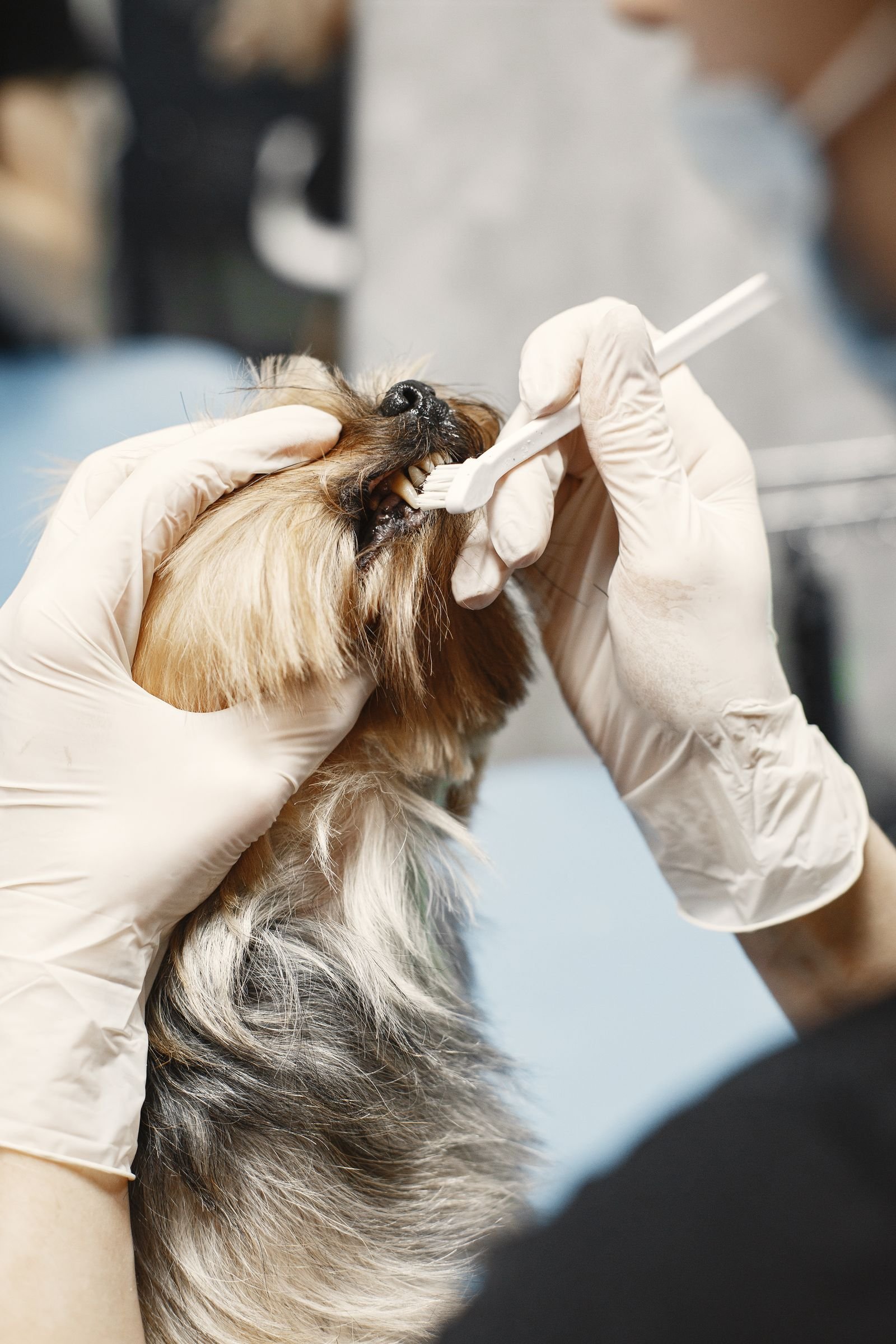
Dental disease is one of the most common problems in dogs and cats, and bad breath is often the first sign. Left untreated, it causes pain and can affect overall health. You can help with regular tooth brushing and dental friendly habits at home, along with professional checks and cleanings recommended by your veterinary team.
Why dental health is about more than fresh breath
Most dogs and cats show some sign of dental disease by the time they are a few years old, yet it is easy to overlook because pets rarely stop eating, even when their mouth is sore. Plaque builds up on the teeth, hardens into tartar, and irritates the gums, leading to inflammation, infection, and eventually loose or painful teeth.
Beyond the mouth, ongoing dental disease can affect a pet’s overall health and comfort. That is why oral care is a core part of looking after your pet, not just a cosmetic concern. Regular checks through our medical services help catch problems early, when they are easier to manage.
Signs of dental trouble to watch for
Bad breath is the most common early clue, and it is not something to shrug off as normal doggy or cat breath. Other signs include red or bleeding gums, yellow or brown tartar on the teeth, drooling, pawing at the mouth, dropping food, chewing on one side, or a reluctance to eat hard food.
Some pets become quieter or less playful simply because their mouth hurts, and owners often notice a change only after treatment, when their pet brightens up. Because pets hide oral pain so well, it is wise to have any of these signs checked rather than waiting to see if they pass.
What a professional dental assessment involves
A thorough dental assessment looks at far more than the visible surfaces of the teeth. Much of dental disease sits below the gumline, where it cannot be seen during a quick look in an awake pet. A proper evaluation checks each tooth and the gums, and often uses imaging through our pet diagnostics to find hidden problems.
A professional cleaning removes plaque and tartar from the teeth and below the gumline, and any diseased or painful teeth are addressed as needed. This is done under careful, monitored anesthesia so the work can be done thoroughly and comfortably, which is not possible in an awake pet.
Caring for your pet’s teeth at home
The single most effective home step is regular tooth brushing with a pet safe toothpaste, ideally daily. Human toothpaste should never be used, as it is not made to be swallowed. Most pets can learn to accept brushing if you introduce it slowly and pair it with praise and rewards.
Dental friendly chews, diets, and water additives can also help reduce plaque, and it is worth choosing products your veterinary team recommends rather than guessing. Home care works alongside professional cleanings, not instead of them, and together they keep your pet’s mouth healthy.
Why early care saves your pet discomfort
Dental disease is progressive, so it tends to get worse without care. Caught early, mild gum inflammation can often be reversed and teeth preserved. Left for longer, the same problem can lead to infection, tooth loss, and ongoing pain that affects your pet’s quality of life.
Addressing dental disease early usually means simpler care and a more comfortable pet. If it has been a while since your pet’s mouth was checked, or you have noticed any warning signs, it is a good time to book an assessment through our diagnostics and dental care.
Building dental care into your pet’s routine
The best results come from making dental care a habit rather than a one off. Regular oral checks at wellness visits let your team track changes and recommend a cleaning at the right time, while daily home care keeps plaque under control between visits.
Every pet is different, and factors such as breed, age, and mouth shape affect how quickly dental disease develops. Your veterinary team can set a schedule that suits your individual pet, so small issues are handled before they become painful problems.
Frequently asked questions
Is bad breath in my pet really a problem?
Usually, yes. Persistent bad breath is one of the earliest signs of dental disease, not just a normal pet smell. It is worth having the mouth checked rather than ignoring it.
Why does a dental cleaning need anesthesia?
Anesthesia allows a thorough, safe cleaning below the gumline and full assessment of each tooth, which is not possible in an awake pet. It is done with careful monitoring to keep your pet comfortable and still.
Can I just brush my pet’s teeth instead?
Brushing is excellent and the best home step, but it cannot remove tartar already stuck to the teeth or treat disease below the gumline. Home care and professional cleanings work together.
My pet is still eating, so are the teeth really painful?
Often yes. Pets instinctively keep eating despite mouth pain, so normal appetite does not rule out dental disease. Many owners notice their pet perk up only after treatment.
How often should my pet’s teeth be checked?
At least at each regular wellness visit, with cleanings as your veterinarian recommends. The right schedule depends on your pet’s breed, age, and how quickly tartar builds up.