
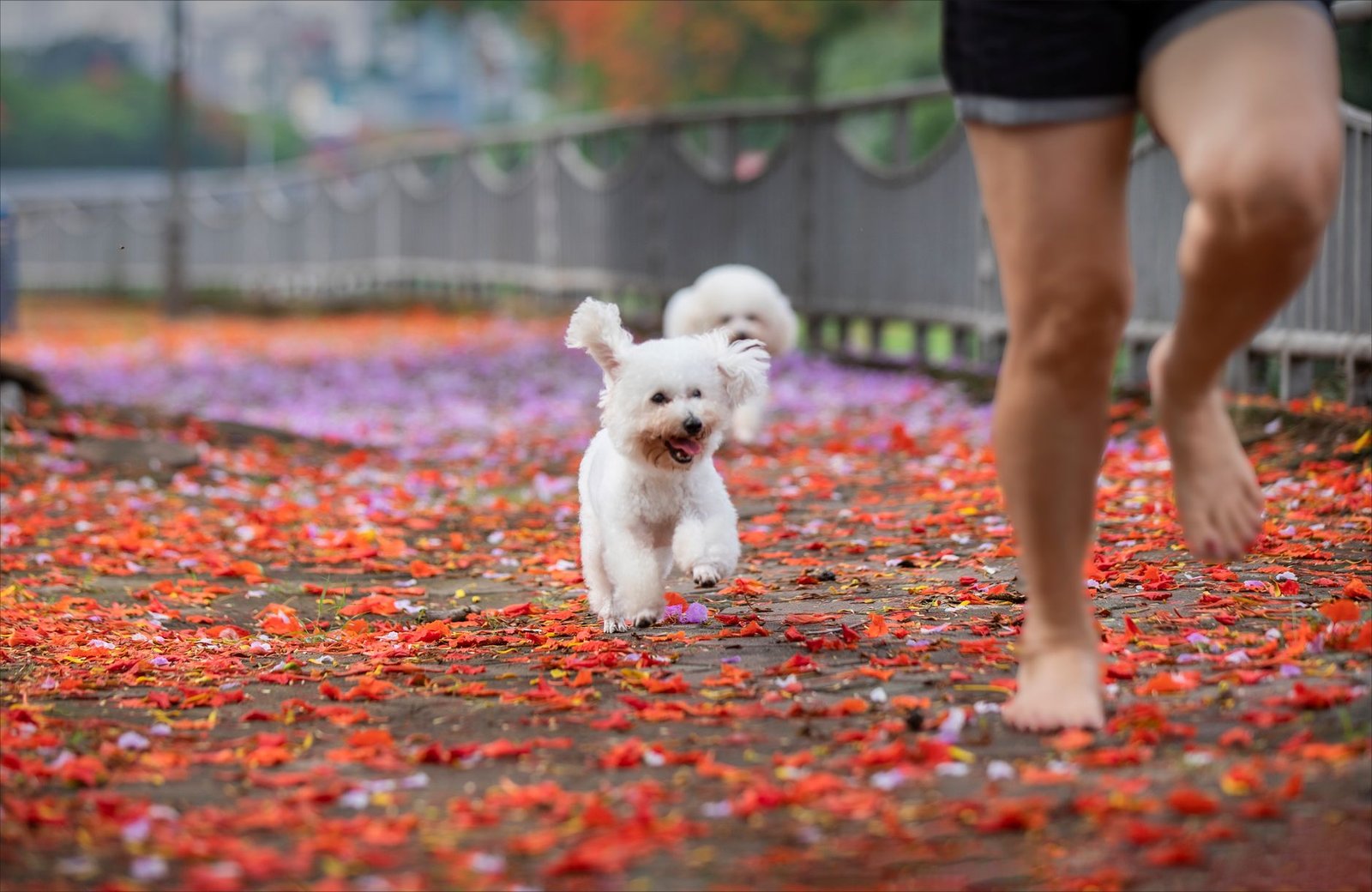
The usual plan is reasonable and wrong: the dog is heavy, so the walks get longer. A pet who is genuinely overweight is doing more work per step than they should, often on sore joints, and starting at the distance you have in mind is the quickest way to end up with a sore dog who dislikes walks.
Why starting low matters more here
Extra weight loads every joint on every stride. An overweight dog taken from twenty minutes to an hour tends to be fine on the day and stiff for two days afterwards, and that soreness is what ends most plans in the first two weeks.
There is also heat and breathing. Carrying extra weight makes both harder, and that is doubly true for flat-faced breeds, who have less margin to begin with.
So the rule is the opposite of the instinct: start shorter and more often than feels useful, and add slowly enough that it feels too slow.
A workable starting point for dogs
- Three short walks a day beats one long one. Ten minutes, three times, is a perfectly respectable beginning for a dog who has not been doing much.
- Add about ten percent a week, and only if the previous week went well with no stiffness the next morning.
- Flat and even to start. Hills and uneven ground load the joints more; save them for later.
- Steady pace rather than sprints. A consistent walk does more for conditioning than ten minutes of chasing a ball and an hour of recovery.
- Watch the morning after. Stiffness getting up is the signal you went too far, not a sign of progress.
- Swimming where it is available, which takes the weight off the joints entirely and is excellent for dogs who are sore.
Through a Mission winter the practical constraint is daylight and footing, which is another argument for three short outings rather than one long one.
Cats need a completely different approach
You cannot walk most cats, and trying to make a cat exercise directly rarely works. What does work is changing how they get their food and what their day looks like.
Scatter part of the daily portion so it has to be hunted. Use a puzzle feeder. Put food on a different level of the house from where they sleep, so eating involves a journey. Add height, a cat tree or a shelf route, because climbing is the exercise cats actually choose. And play twice a day with a wand toy for five minutes, finishing with a catch so the sequence resolves.
Weight loss in cats also needs to be slower and more carefully supervised than in dogs, because cats who lose weight too quickly can develop a serious liver problem. This is the one place where going faster is genuinely risky rather than simply uncomfortable.
Exercise is the smaller half
Worth saying plainly: for most pets, what goes in the bowl moves the number far more than what happens on the walk. Activity protects muscle, improves mobility and helps a great deal with how a pet feels, but very few animals lose meaningful weight on exercise alone.
So the useful plan runs both together, with a measured portion and a target rather than an intention.
Our nutrition counseling works out the actual daily amount for your pet and sets a realistic target, which is the half that does the heavy lifting. A wellness exam is where we weigh, body-score and check that the joints and heart are up to what you are planning before you start. Our medical services cover the cases where weight has gone on without the food changing, because in dogs that sometimes has a reason of its own. Pet diagnostics is how we check that rather than assume it.
Signs to stop and reassess
- Stiffness or limping the morning after a walk.
- Lagging behind or wanting to turn for home when they did not before.
- Heavy breathing that does not settle within a few minutes of stopping.
- Coughing during or after exercise.
- Reluctance to go at all, which in a dog who used to be keen is usually discomfort rather than mood.
- No change after two months of genuinely following the plan, which means the plan needs adjusting rather than more effort.
Our hours
We are open Monday to Friday from 8:00 am to 7:00 pm and Saturday and Sunday from 9:00 am to 4:00 pm. We are closed on statutory holidays and over Christmas.
Weight and exercise are booked appointments. A pet who collapses, who is struggling to breathe, or who suddenly cannot use a leg should be seen immediately. If that happens when we are closed, go to an open emergency hospital rather than waiting for us to open.
Common questions
How much weight should come off each week?
One to two percent of body weight a week for a dog, and the slower end of that for a cat. Faster is not better and in cats it is genuinely risky.
My dog seems happy to walk for an hour.
Dogs will often push well past comfortable, particularly keen ones. Judge by the next morning rather than by their enthusiasm on the day.
Is a treadmill useful?
For some dogs, and it needs proper introduction. Underwater treadmills in a rehabilitation setting are excellent for sore, heavy dogs.
Can I just cut the food instead?
Cutting without a plan risks losing muscle along with fat, which leaves a lighter but weaker animal. The two work together.
My cat will not play at all.
Try different toy types and different times of day, and move the food rather than relying on play. Some cats respond far better to feeding changes than to a wand.
Speak to the team at Lougheed Animal Hospital
Book a weigh-in before you start rather than after, so there is a number to measure against. Then begin shorter than feels worthwhile and add slowly.
Published by the team at Lougheed Animal Hospital.
This article is for general educational purposes only and is not a substitute for an in-person veterinary examination or advice about your individual pet. If you have an urgent concern about your pet, contact Lougheed Animal Hospital or your nearest emergency veterinary hospital right away.
Lougheed Animal Hospital
108-32423 Lougheed Highway, Mission, BC V2V 7B8
Phone: (604) 826-7066
Hours: Monday to Friday 8:00 am to 7:00 pm; Saturday and Sunday 9:00 am to 4:00 pm; closed statutory holidays and Christmas